
Tree Care and Chipping Advice From DYNA’s In House Experts
Tree Care and Chipping Advice From DYNA’s In House Experts
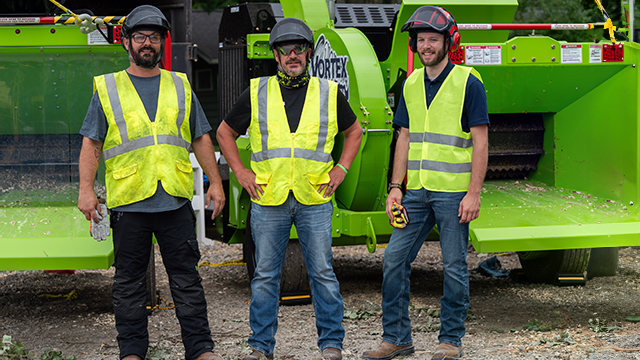
Authors

Whether you’re in tree care, forestry, or just learning how to use a wood chipper safely, this blog is for you. We gathered the top real world questions on everything from identifying hazardous trees to proper chipper feeding techniques and got answers straight from the experts at DYNA.
Should I let my woodchipper warm up? –Trevor
What signs show a tree may be sick or dying? –Noah
One of the most noticeable signs is dead or falling branches. If large limbs are breaking off or sections of the tree no longer produce leaves, it often means the tree is under serious stress. Sparse foliage, unusually small leaves, or leaves that turn yellow or brown out of season can also signal disease or root problems.
Another red flag is damage to the trunk. Cracks, deep splits, peeling bark, or areas where bark is missing may expose the tree to insects and disease. The presence of fungus or mushrooms growing at the base or along the trunk is especially concerning, as it often points to internal decay.
Pay attention to the tree’s growth pattern as well. A tree that suddenly starts leaning or appears unstable could have compromised roots. Holes in the trunk, sawdust like material, or increased insect activity may indicate pests that weaken the tree from the inside.
Finally, a lack of new growth during the growing season is a common sign that a tree is declining. Healthy trees produce new leaves, buds, and branches each year. When that growth stops, it’s often a sign the tree is struggling.
If you notice one or more of these symptoms, it’s best to consult a professional arborist. Early diagnosis can make the difference between saving a tree and needing to remove it for safety reasons.
When should I call a professional arborist? -Noah
• Large or unstable trees: Trees near homes, power lines, or roads require professional handling.
• Storm damaged trees: Broken or hanging limbs can be extremely dangerous.
• Tree health concerns: Signs of disease, rot, or pest infestation are best evaluated by an expert.
• Major pruning or removals: Improper cutting can permanently damage or kill a tree.
• Lack of proper equipment or experience: Safety should always come first.
Can you chip vines, bamboo, or invasive plants? –Stanley
What type of wood is hardest on wood chipper blades? -Noah
Dense hardwoods are the toughest on chipper blades. Woods like oak, hickory, maple, locust, and ash are extremely hard and fibrous, which puts extra strain on cutting edges. Chipping large volumes of these hardwoods can quickly reduce blade sharpness.
Dry or seasoned wood is also harder on blades than fresh, green wood. As wood dries, it becomes more brittle and rigid, increasing resistance during chipping. Similarly, frozen wood can be especially harder to chip because of its added hardness.
Another major factor is knots and irregular grain. Knotted sections are much denser than the surrounding wood.
Beyond wood type, contaminants cause the most severe damage. Dirt, sand, rocks, nails, or other debris embedded in branches will dull chipper blades far faster than wood alone. Even softer woods can be hard on blades if they’re dirty. Trees that are located next to a dirt or gravel road will have road dust embedded in the bark and dull blades faster then trees that are further in the woods.
To extend blade life, it’s best to avoid feeding dirty material into the woodchipper.
What maintenance should I do after each chipping session? –Kris
• Clean out debris: Remove wood chips, dust, and sap buildup from the feed chute, discharge chute, and around the engine.
• Inspect blades and knives: Check for dullness, nicks, or cracks. Sharp blades reduce strain on the engine and improve chip quality.
• Check bolts and fasteners: Vibration can loosen hardware, especially around the blade housing and chute.
• Inspect belts and chains: Look for wear, fraying, or improper tension.
• Grease moving parts: Apply grease to bearings and fittings as recommended by the manufacturer.
• Check fluid levels: Verify engine oil, hydraulic fluid, and fuel levels before storage.
How do I prevent chipper jams and what’s the best feeding
technique? -Noah
• Feed butt end first: Always insert branches with the thicker end first so the chipper can grab and pull material in smoothly.
• Maintain steady feeding: Avoid forcing material into the chipper, let the machine do the work.
• Avoid oversized material: Cut down branches that exceed the manufacturer’s maximum diameter before feeding.
• Remove root balls: Dirt and rocks dull knives quickly and can cause sudden jams or equipment damage.
• Avoid chipping “cookies”: Short, flat wood rounds do not feed properly and can bounce or lodge inside the chipper.
• Alternate material size: Mixing smaller branches with larger ones helps keep material flowing and prevents clogging.
• Follow capacity limits: Never exceed the manufacturer’s maximum diameter recommendations.
• Keep the drive belt properly tensioned: Ensure the drive belt is tightened to the manufacturer’s specifications. A loose or worn belt can reduce cutting power and increase the likelihood of jams.
• Adjust auto feed settings correctly: Make sure the auto feed system is set according to the manufacturer’s guidelines so the rollers engage and disengage at the proper engine or rotor speed.
If a jam does occur, always shut the machine off completely and follow lockout procedures before attempting to clear it.
What type of safety equipment do I need before running a woodchipper? -Noah
• Eye protection: Safety glasses or a face shield to guard against flying debris.
• Hearing protection: Earplugs or earmuffs to prevent hearing damage.
• Gloves: Heavy-duty work gloves for handling material (remove gloves only if the manufacturer requires it during feeding).
• Protective clothing: Close-fitting, durable clothing, no loose sleeves, strings, or jewelry.
• Steel-toe boots: To protect feet from heavy branches and equipment.
• Hard hat: Especially when working near falling limbs or in a team environment.
We’re here to help. Our team at DYNA is committed to sharing real world insight to keep your work safer, smarter, and more productive. Stay tuned for more expert advice, equipment spotlights, and customer stories in the next edition of The Cutting Edge Blog.
Contact us at 989 823 6200 or click here.